
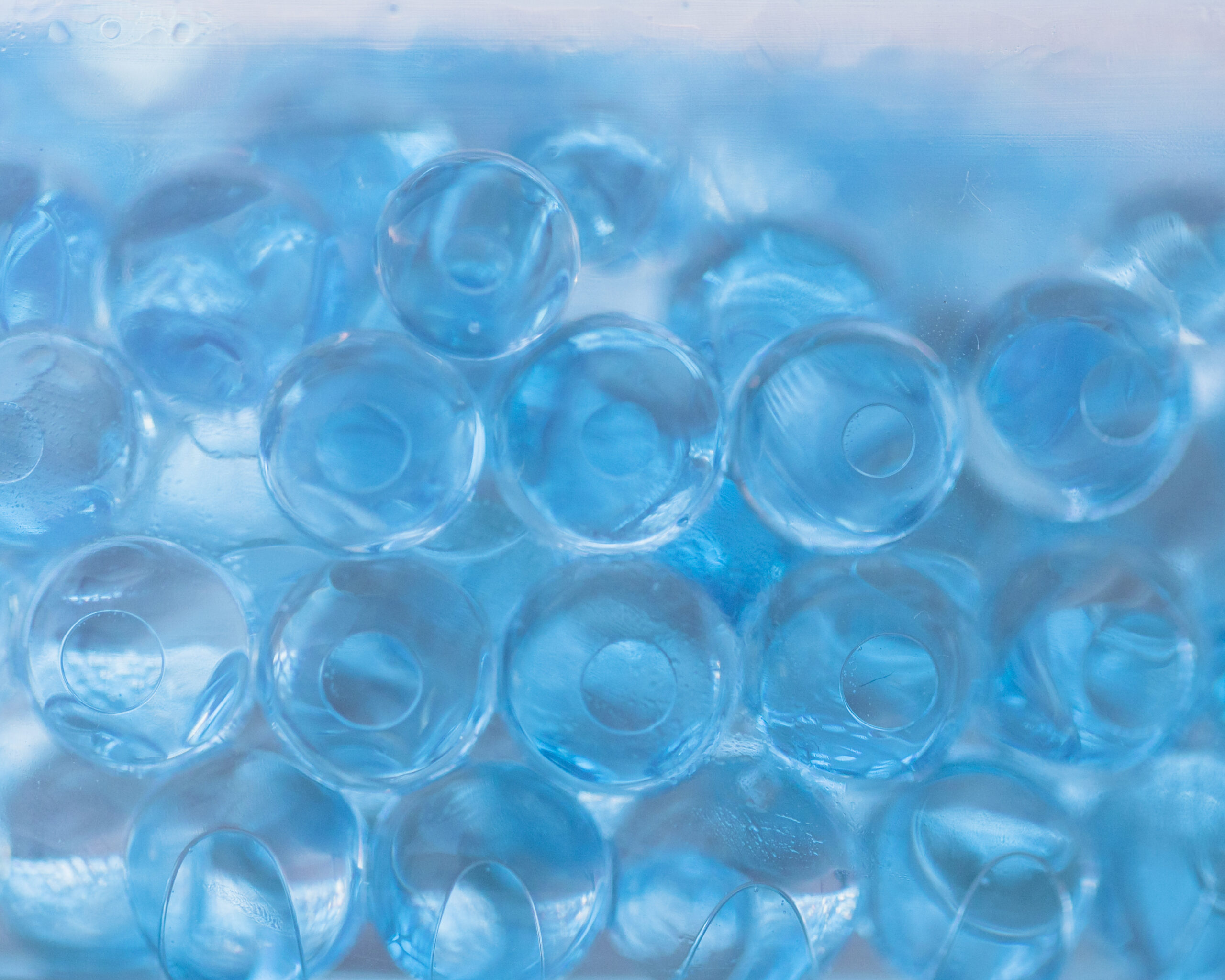
Hydrogel

Hydrogel

Hydrogel by Tricon - Advanced water-rich polymer networks for biomedical and smart material applications

Hydrogels are three-dimensional, cross-linked polymer networks capable of absorbing and retaining large amounts of water—often up to 99% of their total weight—while maintaining a stable, solid-like structure. Their high water content, flexibility, and tissue-like consistency make them highly suitable for biomedical and technological applications. Hydrogels closely mimic natural living tissues, which contributes to their excellent biocompatibility and soft mechanical properties.

Structurally, hydrogels are composed of hydrophilic polymer chains that are either physically or chemically cross-linked. These polymers may be derived from natural sources such as collagen, gelatin, and alginate, or synthesized from materials like polyethylene glycol (PEG) and polyvinyl alcohol (PVA). The cross-linking process creates a stable network that prevents dissolution while allowing water absorption and swelling.

A key characteristic of hydrogels is their ability to retain significant moisture, typically containing at least 10% water but often much more. Many modern hydrogels are classified as “smart” materials, meaning they respond to environmental stimuli such as changes in pH, temperature, light, or electric fields by swelling, shrinking, or undergoing structural transitions.

Hydrogels have diverse applications across industries. In healthcare, they are used in wound dressings to maintain a moist healing environment, in controlled drug delivery systems, contact lenses, and tissue engineering scaffolds. In consumer products, they are found in hygiene products such as diapers. In environmental and agricultural sectors, hydrogels improve soil water retention and assist in wastewater treatment by absorbing pollutants.

Key Types and Characteristics of Di Calcium Phosphate

Hydrogels are available in various forms including sheets, films, beads, granules, injectable gels, and nanoparticle-based systems. They may be natural, synthetic, or hybrid depending on polymer composition. Some are pre-formed solid dressings, while others are in-situ forming gels that solidify after application. Their form depends on the intended biomedical, agricultural, or industrial use.

In food systems, hydrogels are used as thickening agents, stabilizers, fat replacers, and controlled nutrient delivery matrices. They help encapsulate vitamins, probiotics, and bioactive compounds to improve stability and targeted release. Edible hydrogels made from natural polymers like alginate or gelatin enhance texture, moisture retention, and shelf-life in processed food products.

Hydrogels are widely used in wound dressings, drug delivery systems, tissue engineering scaffolds, and contact lenses due to their moisture retention and biocompatibility. Industrially, they are applied in hygiene products, water retention materials, coatings, sensors, and wastewater treatment systems for pollutant absorption and controlled fluid management.

Hydrogels are used in animal nutrition primarily for controlled release of nutrients, probiotics, and veterinary medicines. In agriculture, superabsorbent hydrogels improve water retention in soil, indirectly supporting livestock feed crop production. Their moisture-retaining ability enhances feed preservation and supports sustained nutrient delivery.

Hydrogels are soft, elastic, and highly water-absorbent materials capable of retaining up to 99% water. They are generally non-toxic and biocompatible when formulated from approved polymers. Mechanical strength varies based on cross-linking density. Proper formulation ensures stability, minimal irritation, and safe biomedical or food-grade use.

Hydrogels are produced through polymerization and cross-linking of hydrophilic monomers using chemical, physical, or radiation methods. Cross-linking agents create a three-dimensional network that enables water absorption without dissolution. The material is then molded, dried, sterilized (if biomedical grade), and processed into the required final form.

Property
Details
Chemical Name
Varies depending on polymer type (e.g., Polyacrylamide Hydrogel, Polyethylene Glycol Hydrogel, Alginate Hydrogel)
Chemical Formula
No single formula; depends on base polymer (e.g., (C₃H₅NO)n for polyacrylamide)
Molecular Weight
Varies widely depending on polymer composition and cross-linking density
Water absorption, controlled release system, wound healing support, thickening agent, soil moisture retention, encapsulation matrix
Packaging
Available in sterile pouches (medical grade), bulk bags (industrial grade), drums, or customized packaging depending on application.

Why Choose Tricon?

We are dedicated to providing high-quality food chemicals that meet the highest industry standards. Here’s why you should choose us:

1. Quality Assurance

We ensure that all our products are manufactured with the utmost care and precision, meeting stringent quality control measures. Our products are safe, effective, and consistent.

2. Wide Range of Applications

Our chemicals serve various industries, including food and beverage, pharmaceuticals, and industrial sectors. We offer versatile solutions that help enhance your products' quality and stability.

3. Expertise & Experience

With years of experience in the food chemicals industry, we understand the unique needs of our clients. Our team of experts is committed to providing innovative solutions tailored to your specific requirements.

4. Commitment to Safety

The safety of our products is our top priority. We adhere to all regulatory standards and ensure that our chemicals are safe for their intended applications, including food-grade certifications and more.

5. Customer-Centric Approach

At Tricon, we prioritize building long-term relationships with our clients. We offer personalized support and strive to understand and meet your needs every step of the way.

6. Timely Delivery

We understand the importance of timely supply. Our efficient logistics ensure that your orders are delivered on time, every time.

Versatile Applications of Our Food Chemicals

×
Scroll to Top